One of the most disappointing moments for an employee is receiving a performance rating that is lower than they expected. In most cases, I believe two things are happening.
First, the employee genuinely believes they have made a greater contribution than reflected in the rating. Second, no one has helped them understand what the different performance levels actually mean. The result is disappointment, confusion, and sometimes demotivation.
A simple incident from everyday life changed the way I think about performance ratings.
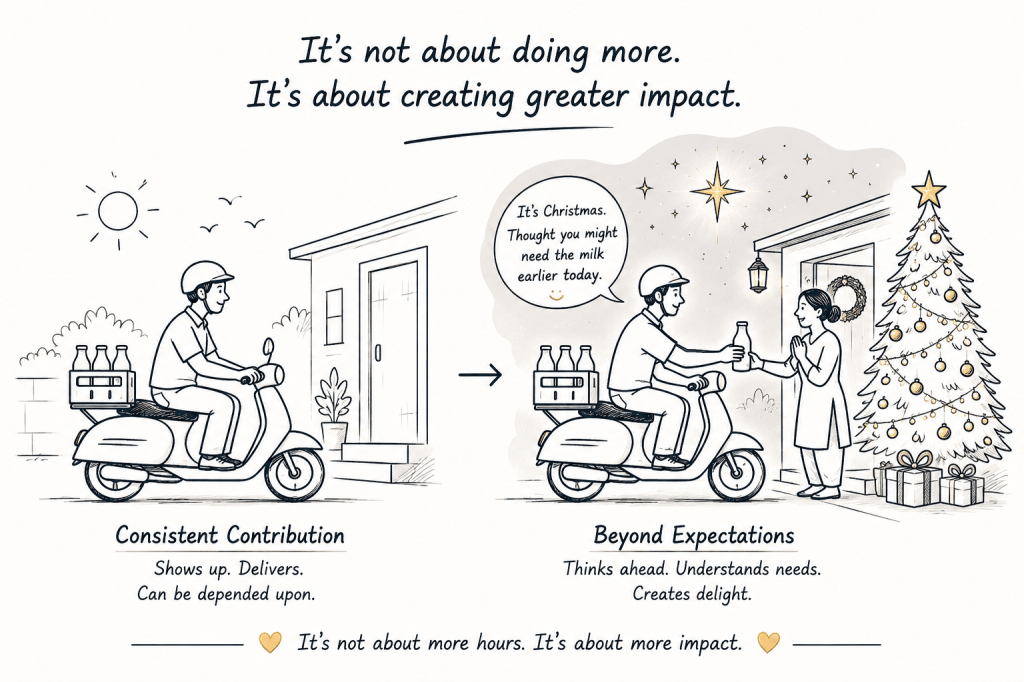
Every morning, our milkman delivered milk to our doorstep on time. We never had to wonder whether he would come. His service was dependable, day after day.
Then one Christmas morning, he arrived much earlier than usual. We were pleasantly surprised and thanked God he had come early because we had several preparations to make. When we casually asked him why he had come so early, he smiled and said, “I thought you might need the milk earlier today for your Christmas preparations.”
That day, he didn’t work harder. He didn’t take on more deliveries. He simply understood his customer’s need and acted before anyone asked.
That is what made his contribution memorable.
This story reminds me of performance ratings.
A Consistent Contributor is someone who reliably fulfills the expectations of their role throughout the year. They deliver quality work, meet commitments, support the team, and can be depended upon. That is not a small achievement.
We often underestimate consistency because it becomes invisible.
When someone quietly delivers, day after day, without creating unnecessary noise or crises, we begin to treat that reliability as normal. In reality, consistent performance is one of the most valuable qualities any organization can have.
I have seen team members work late into the night and even on weekends to meet deadlines. Their commitment deserves appreciation. However, putting in more hours or taking on more work does not automatically translate into a higher performance rating.
A higher rating is not about the effort invested; it is about the value created.
So, what does “beyond expectations” really mean?
It may mean solving a recurring problem instead of repeatedly working around it.
It may mean simplifying a process that saves hours for the entire team.
It may mean preventing a risk before it becomes an issue.
It may mean mentoring teammates, improving quality, strengthening customer relationships, or introducing an idea that creates lasting value.
Notice that none of these examples require burnout.
Going beyond expectations is not about doing more work. It is about creating greater impact.
The same applies to an Excellent Contributor. Excellence is not measured by the number of hours worked or the number of responsibilities accepted. It comes from consistently creating exceptional value, influencing outcomes, and helping others succeed.
This understanding should begin during the goal-setting discussion itself. Employees should know what each performance level represents before the year begins, not discover it during the appraisal conversation.
I also believe team members should periodically reflect on their own performance—not by asking, “How many hours did I work?” but by asking, “What value did I create? Whose work became easier because of my contribution? What problems did I solve?”
Finally, a performance rating should never become a tool that discourages people. Its purpose should be to recognise contributions honestly, provide clarity about expectations, and give employees hope and direction for their next stage of growth.
Because in the end, great performance is not about being busy.
It is about making a meaningful difference.



Leave a Reply